If you have to drive at night! How should you prepare?
Dec 28 , 2017อ่านแล้ว 37,618 ครั้ง
Many friends have said they like driving at night because the weather isn't hot. However, in reality, driving at night offers very poor surrounding visibility, making decision-making difficult. The road is not clearly visible, making it impossible to anticipate distances and obstacles in a timely manner like during the day, which slows down reactions to emergencies... But what if you absolutely have to drive at night! What should you do? Let's take a look >>>
Prepare your body: get enough sleep and rest.
You should check all lighting systems, including high beams, low beams, and signal lights, to ensure they are all ready for use.
Avoid drinking alcohol or taking medication that causes drowsiness, as this can lead to accidents.
Check weather conditions. If there is dense fog or heavy rain, visibility will worsen. You should reduce your speed.
Study the route. If the road surface is poor, under construction, or undergoing repair, avoid it and use another safer route.
If the sky starts to get dark, quickly turn on your headlights so other drivers can see your car better.
Avoid using a vehicle with window tinting that exceeds official standards for travel. However, if it is necessary to use such a vehicle, drivers must exercise extreme caution while driving, because dark tint combined with dark external surroundings means drivers have to strain their eyes more than usual, significantly reducing visibility.
Drive at a speed that allows you to stop within the range of your vision and consistent with the distance illuminated by your headlights. Typically, low beams can clearly show obstacles no more than 40 meters away, while high beams can illuminate about 100 meters.
Before every overtake, make sure no vehicle is coming from the opposite direction. If you see two headlights appear as one, it means the vehicle is far away and you can overtake. However, do not be careless, as it could be a motorcycle or a car with damaged headlights. Click to see Principles of Overtaking and Being Overtaken
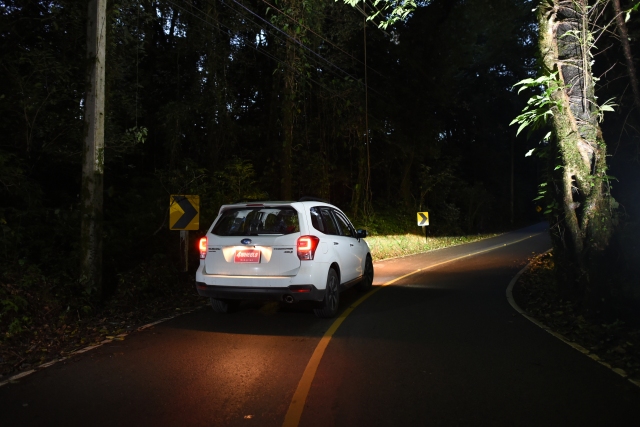
If you have to drive through a very dark route, turn on your high beams. If a vehicle approaches from the opposite direction, switch to low beams immediately. If the road ahead is not clearly visible, flash your high beams intermittently. On winding mountain roads, you should flash your high beams when going around curves to warn oncoming vehicles.
In case of a breakdown, park the car as far to the side of the road as possible, away from the road edge, and give a warning signal to alert following vehicles that the car has broken down by turning on hazard lights or placing a reflective triangular emergency sign about 10 meters behind the car.
Watch this clip as a cautionary tale: the danger of driving while 'drowsy'.
Sharehttps://www.motorexpo.co.th/en/blog/1317
Driving at night offers very poor surrounding visibility, making decision-making difficult. The road is not clearly visible, making it impossible to anticipate distances and obstacles in a timely manner like during the day, which slows down reactions to emergencies... But what if you absolutely have to drive at night!
We use cookies to manage personal data and to develop and improve your website browsing experience, in accordance with our Privacy Policy and Terms of Use.